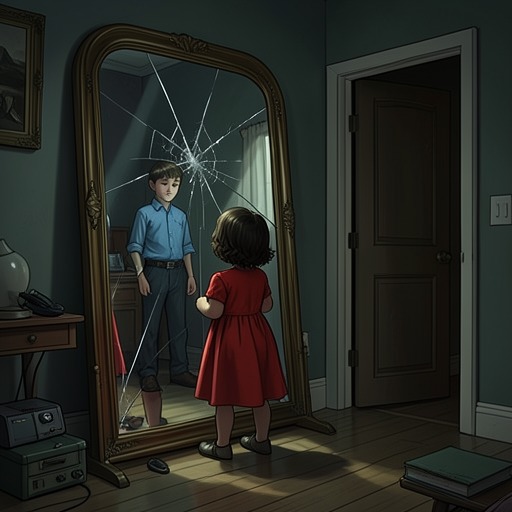
Jamie Cooper's childhood
A Childhood in Disguise
As a child, [Jamie Cooper](entity:character-recall-character-jamie-cooper-426a2c263ee0) found girls' clothes hidden in the attic and wore them in secret, convinced that he was a girl and that his mother wished he had been born one. His parents' attempt to explain that they loved him as their son could not quiet his fear that he was not truly wanted.
At age eighteen, before the main story
An Inheritance and a New House
After an uncle left [Jamie Cooper](entity:character-recall-character-jamie-cooper-426a2c263ee0) a mansion, Jamie Cooper moved in alone, determined to make his own choices and keep his distance from his parents. He was awaiting a meeting with the uncle's lawyer when two neighbors introduced themselves as [Christin](entity:character-recall-character-christin-e12b5d35a7cc) and [Davis](entity:character-recall-character-davis-c2cade005c96).
Soon after Jamie Cooper moved into the mansion
The Deed Ambush
[Christin](entity:character-recall-character-christin-e12b5d35a7cc) and [Davis](entity:character-recall-character-davis-c2cade005c96) drugged [Jamie Cooper](entity:character-recall-character-jamie-cooper-426a2c263ee0)'s wine, tied him up, and demanded the mansion's deed. When he said it was with the lawyer, they decided to fabricate a deed and force him to sign it rather than let him go.
During Jamie Cooper's captivity
Captivity and a Stolen Identity
[Christin](entity:character-recall-character-christin-e12b5d35a7cc) and [Davis](entity:character-recall-character-davis-c2cade005c96) beat and humiliated [Jamie Cooper](entity:character-recall-character-jamie-cooper-426a2c263ee0), insisting that he was nobody and belonged in the gutter. They then imposed a new story on him: he was [Chris Davis](entity:character-recall-character-chris-davis-0114bf3ffeac), their sixteen-year-old son, and his life depended on obeying them.
During the captivity, before Jamie Cooper reached adulthood
The False Family Accident
[Christin](entity:character-recall-character-christin-e12b5d35a7cc) and [Davis](entity:character-recall-character-davis-c2cade005c96) took the captive [Jamie Cooper](entity:character-recall-character-jamie-cooper-426a2c263ee0) on a car trip and staged a crash that became part of [Chris Davis](entity:character-recall-character-chris-davis-0114bf3ffeac)'s false memories: his supposed parents died, and he was left with a severe back injury. The accident story gave Chris Davis an invented orphaned past and helped obscure the kidnapping that had fractured Jamie Cooper's sense of identity.
During Jamie Cooper's captivity
Don's Failed Intervention
A forceful part of [Jamie Cooper](entity:character-recall-character-jamie-cooper-426a2c263ee0), later known as [Don](entity:character-recall-character-don-c375ff9c88e3), appeared while Jamie Cooper was imprisoned and offered to help him escape. Don left to devise a plan, but returned too late: Jamie Cooper had been broken down so thoroughly that he could no longer hear Don or resist the identity [Christin](entity:character-recall-character-christin-e12b5d35a7cc) and [Davis](entity:character-recall-character-davis-c2cade005c96) had imposed.
Over the years before the main story
The Alters Take Shape
As [Jamie Cooper](entity:character-recall-character-jamie-cooper-426a2c263ee0)'s life continued under the effects of trauma, distinct identities emerged to carry different experiences. [Kayla Renae Morrison](entity:character-recall-character-kayla-renae-morriso-b8e820e8ae5c) expressed a self Jamie Cooper had been unable to live openly as a child, [Chris Davis](entity:character-recall-character-chris-davis-0114bf3ffeac) carried the captivity and its invented history, and [Don](entity:character-recall-character-don-c375ff9c88e3) became a defensive, aggressive presence.
Seventeen years before the main story
Marriage and a Hidden Daughter
[Jamie Cooper](entity:character-recall-character-jamie-cooper-426a2c263ee0) married [Jessica Cooper](entity:character-recall-character-jessica-cooper-d22ff765e917), but his periods of missing time and changes in identity made a shared family life increasingly difficult. During one of Jamie Cooper's absences, Jessica Cooper gave birth to [Adi Morrison](entity:character-recall-character-adi-morrison-737d257d7276); [Kayla Renae Morrison](entity:character-recall-character-kayla-renae-morriso-b8e820e8ae5c) later treated Adi Morrison as her own daughter without knowing she was actually Jamie Cooper's child.
During Adi Morrison's childhood
Adi's Concealment
Because [Jamie Cooper](entity:character-recall-character-jamie-cooper-426a2c263ee0) did not remember [Adi Morrison](entity:character-recall-character-adi-morrison-737d257d7276), [Jessica Cooper](entity:character-recall-character-jessica-cooper-d22ff765e917) told Adi Morrison to stay hidden whenever Jamie Cooper was present. [Kayla Renae Morrison](entity:character-recall-character-kayla-renae-morriso-b8e820e8ae5c), by contrast, raised Adi Morrison as her daughter, leaving the girl caught between affection for Kayla Renae Morrison and the secret that Jessica Cooper was her birth mother.
In the years before the main story
Jamie Cooper's Decline
[Jamie Cooper](entity:character-recall-character-jamie-cooper-426a2c263ee0)'s artistic career faltered, and he became depressed, sleepless, and increasingly ashamed that [Jessica Cooper](entity:character-recall-character-jessica-cooper-d22ff765e917) carried the financial burden. He concealed self-harm and thoughts of suicide, while Jessica Cooper tried to keep him safe without telling him what she suspected about his condition.
Six months before the main story
Jessica Cooper's Secret Commission
To give [Jamie Cooper](entity:character-recall-character-jamie-cooper-426a2c263ee0) a reason to keep working, [Jessica Cooper](entity:character-recall-character-jessica-cooper-d22ff765e917) secretly arranged an illustration commission and let Jamie Cooper believe his old agent, [Ortiz Spencer](entity:character-recall-character-ortiz-spencer-5116e0d9be99), had given him the job. Jamie Cooper spent the advance and struggled to produce the work, unaware that Ortiz Spencer was already dead and had never commissioned him.
Over the years before the main story
Jessica Cooper's Theft
[Jessica Cooper](entity:character-recall-character-jessica-cooper-d22ff765e917) stole valuable paintings and clothing from [Kayla Renae Morrison](entity:character-recall-character-kayla-renae-morriso-b8e820e8ae5c), selling the art discreetly through dealer [Taylor Gonzalez](entity:character-recall-character-taylor-gonzalez-f6d89267cc99). She told herself the money would pay for [Jamie Cooper](entity:character-recall-character-jamie-cooper-426a2c263ee0)'s care and secure a better future for their family, but her secret dealings grew into a plan to take Kayla Renae Morrison's wealth.
Before the main story
Don's Resentment
[Don](entity:character-recall-character-don-c375ff9c88e3) watched the other identities and resented being ignored except when someone needed protection. He sometimes intervened on their behalf, but his belief that he was used and discarded fed the violence and jealousy that would later turn against [Kayla Renae Morrison](entity:character-recall-character-kayla-renae-morriso-b8e820e8ae5c).
About a year before the main story
A Lonely Hotel Worker
Living in extreme poverty in [New Orleans](entity:location-recall-location-new-orleans-ac6617a07d7e), [Chris Davis](entity:character-recall-character-chris-davis-0114bf3ffeac) worked as a janitor at [Morrison Hotel](entity:location-recall-location-morrison-hotel-fffc0dbbb4d9) despite chronic back pain and a limp. The hotel staff's warmth gave Chris Davis a rare sense of belonging, and he found comfort in simple routines, hot chocolate, and caring for the people around him.
Before the opening scene
Kayla's Personal Advertisement
[Kayla Renae Morrison](entity:character-recall-character-kayla-renae-morriso-b8e820e8ae5c) placed a newspaper advertisement seeking a male companion willing to correspond by letter. Wealth had made her wary of men who pursued her for money, so she hoped letters would let her discover character before a suitor learned who she was.
Prologue, before Kayla Renae Morrison's first reply
Chris Finds the Advertisement
While taking out trash at [Morrison Hotel](entity:location-recall-location-morrison-hotel-fffc0dbbb4d9), [Chris Davis](entity:character-recall-character-chris-davis-0114bf3ffeac) noticed [Kayla Renae Morrison](entity:character-recall-character-kayla-renae-morriso-b8e820e8ae5c)'s advertisement and felt a fragile hope that he might be loved despite his poverty and disability. He tried several drafts, discarding each one before finally deciding that honesty about his life was better than pretending to be someone else.
Soon after Chris Davis finds the advertisement
Chris Davis Writes Honestly
[Chris Davis](entity:character-recall-character-chris-davis-0114bf3ffeac) wrote to [Kayla Renae Morrison](entity:character-recall-character-kayla-renae-morriso-b8e820e8ae5c) about losing his parents, his life in [New Orleans](entity:location-recall-location-new-orleans-ac6617a07d7e), his love of mysteries, and his favorite hot chocolate café. He hesitated to describe his appearance and circumstances, but chose to believe that a real connection could matter more than money or looks.
Around the start of the correspondence
Kayla Renae Morrison's Lavish World
At an auction at [Vanessa Lauren Art Gallery](entity:location-recall-location-vanessa-lauren-art-g-ee581c566fff), [Kayla Renae Morrison](entity:character-recall-character-kayla-renae-morriso-b8e820e8ae5c) spent heavily on paintings while resenting the social crowd around her. Her public power and private loneliness stood in contrast: she owned [Morrison Group of Hotels](entity:organization-recall-organization-morrison-group-o-50e00f437401) and a vast art collection, yet longed for someone who wanted her rather than her fortune.
After the correspondence begins
The First Letter Arrives
[Jessica Cooper](entity:character-recall-character-jessica-cooper-d22ff765e917) brought [Kayla Renae Morrison](entity:character-recall-character-kayla-renae-morriso-b8e820e8ae5c) [Chris Davis](entity:character-recall-character-chris-davis-0114bf3ffeac)'s first letter. Its plain account of hardship and its affection for hot chocolate and stargazing moved Kayla Renae Morrison, who imagined that this stranger might care for her without knowing her wealth.
Soon after reading Chris Davis's first letter
Kayla Renae Morrison Replies
[Kayla Renae Morrison](entity:character-recall-character-kayla-renae-morriso-b8e820e8ae5c) replied that she felt a connection and disclosed that she had a sixteen-year-old daughter, [Adi Morrison](entity:character-recall-character-adi-morrison-737d257d7276). She withheld her fortune and described herself as an ordinary woman seeking love, while [Chris Davis](entity:character-recall-character-chris-davis-0114bf3ffeac) received her letter in his bare apartment and treasured its lipstick mark as proof that he mattered to someone.
During the first weeks of correspondence
A Promise of Family
[Chris Davis](entity:character-recall-character-chris-davis-0114bf3ffeac) told [Kayla Renae Morrison](entity:character-recall-character-kayla-renae-morriso-b8e820e8ae5c) about his back injury and his belief that a person's heart mattered more than appearance. Their letters quickly grew intimate: Chris Davis imagined having a child with Kayla Renae Morrison, while Kayla Renae Morrison felt a tenderness she had not experienced in years.
During the early correspondence
Blake Anderson's Arrival
[Blake Anderson](entity:character-recall-character-blake-anderson-350e16d68a0c) became a new manager at [Morrison Hotel](entity:location-recall-location-morrison-hotel-fffc0dbbb4d9) and immediately challenged the way [Chris Davis](entity:character-recall-character-chris-davis-0114bf3ffeac) was treated at work. [Kayla Renae Morrison](entity:character-recall-character-kayla-renae-morriso-b8e820e8ae5c) found Blake Anderson unsettling, while Blake Anderson's attention to her and to Chris Davis would eventually connect the hotel workplace to the family's hidden crisis.
Soon after Blake Anderson takes charge
Blake Anderson Humiliates Chris
At a staff meeting, [Blake Anderson](entity:character-recall-character-blake-anderson-350e16d68a0c) questioned why a janitor with a visible disability was present and suggested [Chris Davis](entity:character-recall-character-chris-davis-0114bf3ffeac) could not do his job. [Jessica Cooper](entity:character-recall-character-jessica-cooper-d22ff765e917) and the hotel staff defended Chris Davis's diligence and kindness, but the public insult left Chris Davis ashamed and renewed his fear that he would be dismissed as useless.
The day after the staff meeting
The Hotel Staff Rally Around Chris
[Jessica Cooper](entity:character-recall-character-jessica-cooper-d22ff765e917) brought [Chris Davis](entity:character-recall-character-chris-davis-0114bf3ffeac) hot chocolate and told him to rest after the humiliation. [Hailey](entity:character-recall-character-hailey-e9d2a4a1e5bd) and [Lily](entity:character-recall-character-lily-96089ba009e2) also showed him affection, underscoring how the hotel's ordinary kindness had become Chris Davis's closest substitute for family.
During Kayla Renae Morrison's early correspondence with Chris Davis
Adi Morrison's Rebellion
At [Morrison Villa](entity:location-recall-location-morrison-villa-2cc182ee2a82), [Adi Morrison](entity:character-recall-character-adi-morrison-737d257d7276) fought with [Kayla Renae Morrison](entity:character-recall-character-kayla-renae-morriso-b8e820e8ae5c), skipped school, and altered her hair, while Kayla Renae Morrison responded with anger and punishment rather than understanding. Adi Morrison accused [Jessica Cooper](entity:character-recall-character-jessica-cooper-d22ff765e917) of telling her that anger could make a person hurt someone they loved, exposing the tension and secrecy inside the household.
After Adi Morrison leaves Morrison Villa
The Runaway Daughter
[Adi Morrison](entity:character-recall-character-adi-morrison-737d257d7276) ran away and spent days moving between hotels and parties, trying to escape the restrictions imposed by [Kayla Renae Morrison](entity:character-recall-character-kayla-renae-morriso-b8e820e8ae5c). After a friend betrayed her at a party and police broke it up, [Jessica Cooper](entity:character-recall-character-jessica-cooper-d22ff765e917) collected Adi Morrison from the station and urged her to return home, but Adi Morrison remained defiant and distrustful.
During the early present-day events
Jamie Cooper's Private Despair
In his art studio, [Jamie Cooper](entity:character-recall-character-jamie-cooper-426a2c263ee0) struggled to draw and hid his despair from [Jessica Cooper](entity:character-recall-character-jessica-cooper-d22ff765e917). He contemplated suicide and continued to cut himself, while Jessica Cooper urged him to rest and arranged a doctor's appointment he did not want to attend.
After the supposed comic-book assignment
The Fabricated Commission Cracks
At dinner, [Jamie Cooper](entity:character-recall-character-jamie-cooper-426a2c263ee0) noticed that [Jessica Cooper](entity:character-recall-character-jessica-cooper-d22ff765e917) had bought an expensive dress while claiming it came from a thrift store. The lie added to his suspicion that she was concealing money and keeping parts of her life from him.
After Jamie Cooper contacts Ortiz Spencer's number
Ortiz Spencer Is Dead
[Jamie Cooper](entity:character-recall-character-jamie-cooper-426a2c263ee0) reached [Ortiz Spencer](entity:character-recall-character-ortiz-spencer-5116e0d9be99)'s widow and learned that Ortiz Spencer had died a year earlier and had never commissioned the comic-book project. [Jessica Cooper](entity:character-recall-character-jessica-cooper-d22ff765e917) had been pretending to communicate with Ortiz Spencer, leaving Jamie Cooper to wonder how much of their marriage rested on deception.
During the investigation of Kayla Renae Morrison's missing art
The Secret Child in the Car
After visiting the orphanage, [Jessica Cooper](entity:character-recall-character-jessica-cooper-d22ff765e917) discovered [Little Jay](entity:character-recall-character-little-jay-4084b99ad546) hidden in her car and took him to eat at [Eva's Diner](entity:location-recall-location-eva-s-diner-b4134719ce13) before returning him. [Detective Quentin](entity:character-recall-character-detective-quentin-035f5d824741) encountered them and noticed the child's trust in Jessica Cooper, while she struggled to explain her bond with him without revealing more than she could safely say.
After Kayla Renae Morrison returns from travel
The Letters Disappear
[Kayla Renae Morrison](entity:character-recall-character-kayla-renae-morriso-b8e820e8ae5c) came home expecting to reread [Chris Davis](entity:character-recall-character-chris-davis-0114bf3ffeac)'s letters, only to find that the letters and an expensive coat had vanished. Convinced that [Adi Morrison](entity:character-recall-character-adi-morrison-737d257d7276) might have taken them, Kayla Renae Morrison tore through her daughter's room in a burst of uncontrolled anger before realizing that she had no proof.
Soon after the letters disappear
The Painting Theft Emerges
[Kayla Renae Morrison](entity:character-recall-character-kayla-renae-morriso-b8e820e8ae5c) discovered that paintings were missing from both her study and her art room. [Detective Zack](entity:character-recall-character-detective-zack-8a12e55641d8) and [Detective Quentin](entity:character-recall-character-detective-quentin-035f5d824741) investigated the mansion, questioned the staff, and found no clear sign of forced entry, deepening the suspicion that the theft involved someone with access to the house.
During the painting investigation
Jessica Cooper Fails the Polygraph
[Jessica Cooper](entity:character-recall-character-jessica-cooper-d22ff765e917) failed a polygraph test, but [Detective Quentin](entity:character-recall-character-detective-quentin-035f5d824741) did not arrest her. He questioned why she had claimed to be unmarried despite a seventeen-year marriage and continued to suspect that she knew more about the stolen paintings than she admitted.
After the mansion investigation begins
The Letters Change to Email
[Kayla Renae Morrison](entity:character-recall-character-kayla-renae-morriso-b8e820e8ae5c) wrote to [Chris Davis](entity:character-recall-character-chris-davis-0114bf3ffeac) that her letters had disappeared and proposed switching to email. The paintings were missing too, and her growing sense that someone had entered her home made her more dependent on Chris Davis's affection even as their relationship remained distant from ordinary life.
During the investigation, before the planned date
Chris Davis Learns of the Threat
At [Cocomo Café](entity:location-recall-location-cocomo-caf-25ac09b6fabe), [Chris Davis](entity:character-recall-character-chris-davis-0114bf3ffeac) learned that a red-haired man had been asking the staff questions about his mental health and personal life. The description matched [Blake Anderson](entity:character-recall-character-blake-anderson-350e16d68a0c), and Chris Davis feared that his past would cost him his job just as he had begun to imagine a future with [Kayla Renae Morrison](entity:character-recall-character-kayla-renae-morriso-b8e820e8ae5c).
Before Saturday
The First Date Is Set
[Chris Davis](entity:character-recall-character-chris-davis-0114bf3ffeac) invited [Kayla Renae Morrison](entity:character-recall-character-kayla-renae-morriso-b8e820e8ae5c) to dinner at [Cocomo Café](entity:location-recall-location-cocomo-caf-25ac09b6fabe) and suggested stargazing afterward. He sent a photograph so she could recognize him, and Kayla Renae Morrison, delighted by the invitation, prepared to share a photograph of herself in return.
Saturday, around noon
The Poisoned Drink
At [Cocomo Café](entity:location-recall-location-cocomo-caf-25ac09b6fabe), [Kayla Renae Morrison](entity:character-recall-character-kayla-renae-morriso-b8e820e8ae5c) received a peanut butter fudge hot chocolate she had not ordered; someone else had placed it for her. Because Kayla Renae Morrison had a severe peanut allergy, the drink triggered a dangerous reaction, and she accused the café staff of poisoning her before collapsing at [Morrison Villa](entity:location-recall-location-morrison-villa-2cc182ee2a82).
Saturday evening
Chris Davis Waits Alone
[Chris Davis](entity:character-recall-character-chris-davis-0114bf3ffeac) waited at [Cocomo Café](entity:location-recall-location-cocomo-caf-25ac09b6fabe) for [Kayla Renae Morrison](entity:character-recall-character-kayla-renae-morriso-b8e820e8ae5c), unaware that she had been hospitalized after the allergic reaction. When she did not arrive, fear gave way to the belief that she had rejected him, repeating the heartbreak he had known before.
Saturday evening, while Chris Davis waits
Adi Morrison Meets Chris Again
[Adi Morrison](entity:character-recall-character-adi-morrison-737d257d7276) found [Chris Davis](entity:character-recall-character-chris-davis-0114bf3ffeac) at [Cocomo Café](entity:location-recall-location-cocomo-caf-25ac09b6fabe) and recognized him as the man who had helped her earlier. They shared hot chocolate and went to a movie after [Kayla Renae Morrison](entity:character-recall-character-kayla-renae-morriso-b8e820e8ae5c) failed to arrive; their common loneliness formed an unexpected friendship.
That night, after the poisoning
Kayla Renae Morrison Wakes in Danger
[Adi Morrison](entity:character-recall-character-adi-morrison-737d257d7276) returned to find [Jessica Cooper](entity:character-recall-character-jessica-cooper-d22ff765e917) tending to [Kayla Renae Morrison](entity:character-recall-character-kayla-renae-morriso-b8e820e8ae5c), whose swollen, inflamed face showed how close the allergic reaction had brought her to death. Jessica Cooper suspected Adi Morrison because she knew about the allergy, but Adi Morrison denied responsibility and stayed beside her mother.
Around the time of the poisoning
Blake Anderson's Obsession
[Blake Anderson](entity:character-recall-character-blake-anderson-350e16d68a0c) searched online for information about [Kayla Renae Morrison](entity:character-recall-character-kayla-renae-morriso-b8e820e8ae5c) and fixated on the mystery of her guarded private life. Although he was curious rather than openly hostile, his attention made him a plausible suspect when Kayla Renae Morrison began to fear that someone was stalking her.
Before Don returns to New Orleans
Don Is Fired
Elsewhere, [Don](entity:character-recall-character-don-c375ff9c88e3) lost his job at a bar after his employer caught him drinking on duty, stealing liquor, and behaving violently. With little money and nowhere to go, Don decided to head to [New Orleans](entity:location-recall-location-new-orleans-ac6617a07d7e) to see [Kayla Renae Morrison](entity:character-recall-character-kayla-renae-morriso-b8e820e8ae5c) and [Jessica Cooper](entity:character-recall-character-jessica-cooper-d22ff765e917), carrying resentment as well as a desire to reconnect with [Little Jay](entity:character-recall-character-little-jay-4084b99ad546).
Before the first planned date, on a night out
Chris Davis Rescues Adi Morrison
In an alley, Jimmy attacked [Adi Morrison](entity:character-recall-character-adi-morrison-737d257d7276) and began to choke her. [Chris Davis](entity:character-recall-character-chris-davis-0114bf3ffeac) stepped between them and drove Jimmy away, then offered Adi Morrison a safe place to rest and treated her with the gentleness she rarely received at home.
That night, after the alley attack
A Brief Refuge
At [Chris Davis's apartment](entity:location-recall-location-chris-davis-s-apartm-9cf9c7a45464), [Adi Morrison](entity:character-recall-character-adi-morrison-737d257d7276) saw the poverty and hardship behind his quiet kindness. They drank hot chocolate and spoke about family; [Chris Davis](entity:character-recall-character-chris-davis-0114bf3ffeac) encouraged Adi Morrison to return home, but she left to stay with another boy, unwilling to face the empty mansion.
A few days after the first date was scheduled
The Second Meeting Falls Apart
[Kayla Renae Morrison](entity:character-recall-character-kayla-renae-morriso-b8e820e8ae5c) arranged to meet [Chris Davis](entity:character-recall-character-chris-davis-0114bf3ffeac) at [Cocomo Café](entity:location-recall-location-cocomo-caf-25ac09b6fabe), but her recovery and family turmoil delayed the meeting. Chris Davis eventually saw [Adi Morrison](entity:character-recall-character-adi-morrison-737d257d7276) there instead and, after the two shared a drink, went with her to a movie rather than spend another night alone.
After Kayla Renae Morrison is poisoned
Jessica Cooper Sells the Paintings
[Jessica Cooper](entity:character-recall-character-jessica-cooper-d22ff765e917) met [Taylor Gonzalez](entity:character-recall-character-taylor-gonzalez-f6d89267cc99) and arranged to sell another collection of [Kayla Renae Morrison](entity:character-recall-character-kayla-renae-morriso-b8e820e8ae5c)'s original paintings. She planned to use the money to remove Kayla Renae Morrison and [Chris Davis](entity:character-recall-character-chris-davis-0114bf3ffeac) from her path with help from [Dr. Reid Francois](entity:character-recall-character-dr-reid-francois-b7501f0fce1e), while hoping to secure a future for herself and [Jamie Cooper](entity:character-recall-character-jamie-cooper-426a2c263ee0).
During Kayla Renae Morrison's recovery
The Cigarette Clue
While walking near the woods at [Morrison Villa](entity:location-recall-location-morrison-villa-2cc182ee2a82), [Kayla Renae Morrison](entity:character-recall-character-kayla-renae-morriso-b8e820e8ae5c) found cigarette ends and a large footprint, signs that an unknown man had been on the property. She questioned [Jessica Cooper](entity:character-recall-character-jessica-cooper-d22ff765e917), then decided the family should leave the mansion and stay at [Morrison Hotel](entity:location-recall-location-morrison-hotel-fffc0dbbb4d9) until the danger passed.
After Jessica Cooper meets Taylor Gonzalez
Don Threatens Jessica Cooper
[Don](entity:character-recall-character-don-c375ff9c88e3) confronted [Jessica Cooper](entity:character-recall-character-jessica-cooper-d22ff765e917) in a parking lot and admitted that he had stalked [Kayla Renae Morrison](entity:character-recall-character-kayla-renae-morriso-b8e820e8ae5c) and arranged the poisoned drink. He threatened to expose Jessica Cooper's thefts and secrets unless she helped him get close to Kayla Renae Morrison, and insisted that they shared an interest in taking her wealth.
After Jessica Cooper's secret sales meeting
Jamie Cooper Finds the Paintings
Suspicious of [Jessica Cooper](entity:character-recall-character-jessica-cooper-d22ff765e917)'s absences and explanations, [Jamie Cooper](entity:character-recall-character-jamie-cooper-426a2c263ee0) searched her belongings and discovered a hidden study behind a closet. Inside, he found Jessica Cooper's notes about getting rid of [Kayla Renae Morrison](entity:character-recall-character-kayla-renae-morriso-b8e820e8ae5c) and paintings stolen from Kayla Renae Morrison's home.
That evening
The Attempted Surrender
[Jamie Cooper](entity:character-recall-character-jamie-cooper-426a2c263ee0) called the police intending to turn himself in and return the paintings, mistakenly taking responsibility for [Jessica Cooper](entity:character-recall-character-jessica-cooper-d22ff765e917)'s crimes. When Jessica Cooper returned home and learned what he had found, she persuaded him to leave with her before police could question him.
During the drive to Morrison Hotel
Jessica Cooper Sedates Jamie
As [Jamie Cooper](entity:character-recall-character-jamie-cooper-426a2c263ee0) demanded an explanation and accused [Jessica Cooper](entity:character-recall-character-jessica-cooper-d22ff765e917) of infidelity, Jessica Cooper kept driving toward [Morrison Hotel](entity:location-recall-location-morrison-hotel-fffc0dbbb4d9). She used a tranquilizer syringe to incapacitate him, then called someone to report that her plans had changed.
During the family's hotel stay
Kayla Renae Morrison Reveals Her Fortune
[Kayla Renae Morrison](entity:character-recall-character-kayla-renae-morriso-b8e820e8ae5c) finally told [Chris Davis](entity:character-recall-character-chris-davis-0114bf3ffeac) that she owned [Morrison Group of Hotels](entity:organization-recall-organization-morrison-group-o-50e00f437401) and was one of the world's richest women. She explained that wealth had made men use her, but insisted that Chris Davis was different because he had loved her without asking about her money.
After Kayla Renae Morrison's disclosure
Chris Davis Accepts the Truth
[Chris Davis](entity:character-recall-character-chris-davis-0114bf3ffeac) answered that he worked for [Kayla Renae Morrison](entity:character-recall-character-kayla-renae-morriso-b8e820e8ae5c) as a janitor and still wanted to marry her. The revelation thrilled Kayla Renae Morrison, who learned from [Jessica Cooper](entity:character-recall-character-jessica-cooper-d22ff765e917) that Chris Davis worked in a separate area of [Morrison Hotel](entity:location-recall-location-morrison-hotel-fffc0dbbb4d9) and had been there for a year without meeting her.
The next day, before the evening
A Rooftop Meeting Is Planned
[Kayla Renae Morrison](entity:character-recall-character-kayla-renae-morriso-b8e820e8ae5c) decided to stay at [Morrison Hotel](entity:location-recall-location-morrison-hotel-fffc0dbbb4d9) one more night so she could finally meet [Chris Davis](entity:character-recall-character-chris-davis-0114bf3ffeac) in person. She dressed for their rooftop date and asked [Jessica Cooper](entity:character-recall-character-jessica-cooper-d22ff765e917) to let [Adi Morrison](entity:character-recall-character-adi-morrison-737d257d7276) know where she would be, while Jessica Cooper appeared anxious and kept checking her phone.
The next day, evening
The Rooftop Revelation
Instead of [Chris Davis](entity:character-recall-character-chris-davis-0114bf3ffeac), [Blake Anderson](entity:character-recall-character-blake-anderson-350e16d68a0c) arrived on the rooftop with [Richard Cooper](entity:character-recall-character-richard-cooper-6db9e37846bd) and [Kimberly Cooper](entity:character-recall-character-kimberly-cooper-2a78d0b49550), who called [Kayla Renae Morrison](entity:character-recall-character-kayla-renae-morriso-b8e820e8ae5c) by [Jamie Cooper](entity:character-recall-character-jamie-cooper-426a2c263ee0)'s name. [Jessica Cooper](entity:character-recall-character-jessica-cooper-d22ff765e917) revealed that Kayla Renae Morrison and Chris Davis were alters of her husband, Jamie Cooper, and that Jamie Cooper had dissociative identity disorder.
Immediately after the rooftop revelation
Kayla Renae Morrison Is Hospitalized
Overwhelmed by the claim that she was not a separate person, [Kayla Renae Morrison](entity:character-recall-character-kayla-renae-morriso-b8e820e8ae5c) collapsed. She later woke in a psychiatric hospital, confused and angry, and learned that [Don](entity:character-recall-character-don-c375ff9c88e3) had been considered dangerous enough to justify keeping her under close supervision.
During Kayla Renae Morrison's first days in hospital
The Letters Become Evidence
[Jessica Cooper](entity:character-recall-character-jessica-cooper-d22ff765e917) showed [Kayla Renae Morrison](entity:character-recall-character-kayla-renae-morriso-b8e820e8ae5c) the letters exchanged with [Chris Davis](entity:character-recall-character-chris-davis-0114bf3ffeac) and pointed out that they had been written in the same hand. Kayla Renae Morrison rejected the explanation and demanded to go home, convinced that Jessica Cooper was trying to take away the only relationship that had made her feel loved.
During the first therapy sessions
Jessica Cooper's Hidden Marriage
[Jessica Cooper](entity:character-recall-character-jessica-cooper-d22ff765e917) showed [Kayla Renae Morrison](entity:character-recall-character-kayla-renae-morriso-b8e820e8ae5c) a family photo album, revealing her seventeen-year marriage to [Jamie Cooper](entity:character-recall-character-jamie-cooper-426a2c263ee0) and her own motherhood of [Adi Morrison](entity:character-recall-character-adi-morrison-737d257d7276). Kayla Renae Morrison recognized Adi Morrison in the photographs and began to understand that she had been living a family story that did not belong to her alone.
During an early hypnosis session
Kayla Renae Morrison's Childhood Recalled
Under hypnosis, [Kayla Renae Morrison](entity:character-recall-character-kayla-renae-morriso-b8e820e8ae5c) recalled [Jamie Cooper](entity:character-recall-character-jamie-cooper-426a2c263ee0)'s childhood: the hidden dresses, the belief that his mother wanted a daughter, and the pain of feeling unseen. The memory explained why Kayla Renae Morrison had become a way for Jamie Cooper to live an identity he had been forced to suppress.
After Kayla Renae Morrison's first therapy sessions
The Alters Are Introduced
[Dr. Reid Francois](entity:character-recall-character-dr-reid-francois-b7501f0fce1e) explained that [Jamie Cooper](entity:character-recall-character-jamie-cooper-426a2c263ee0) had several alters, including [Kayla Renae Morrison](entity:character-recall-character-kayla-renae-morriso-b8e820e8ae5c), [Chris Davis](entity:character-recall-character-chris-davis-0114bf3ffeac), [Don](entity:character-recall-character-don-c375ff9c88e3), and [Little Jay](entity:character-recall-character-little-jay-4084b99ad546), and that treatment would involve understanding their origins. Kayla Renae Morrison agreed to continue therapy but clung to the hope that Chris Davis could still reach her.
During a later hypnosis session
Chris Davis Learns He Is an Alter
[Dr. Reid Francois](entity:character-recall-character-dr-reid-francois-b7501f0fce1e) brought [Chris Davis](entity:character-recall-character-chris-davis-0114bf3ffeac) forward and explained that [Kayla Renae Morrison](entity:character-recall-character-kayla-renae-morriso-b8e820e8ae5c) was not a separate lover but another identity in [Jamie Cooper](entity:character-recall-character-jamie-cooper-426a2c263ee0)'s mind. Chris Davis resisted the revelation, insisting that his memories, pain, and love for Kayla Renae Morrison were real, then broke down as the life he believed he had lived came into question.
During the same treatment period
Don's Confession
[Don](entity:character-recall-character-don-c375ff9c88e3) took control and admitted that he had ordered the poisoned drink to frighten [Kayla Renae Morrison](entity:character-recall-character-kayla-renae-morriso-b8e820e8ae5c) and force the others to notice him. He also revealed that he had watched over the other alters, punished [Blake Anderson](entity:character-recall-character-blake-anderson-350e16d68a0c) for humiliating [Chris Davis](entity:character-recall-character-chris-davis-0114bf3ffeac), and intended to frame [Jessica Cooper](entity:character-recall-character-jessica-cooper-d22ff765e917) for the attack and thefts.
During Don's confrontation with Dr. Reid Francois
Don's Motive Is Exposed
[Don](entity:character-recall-character-don-c375ff9c88e3) said he hated [Kayla Renae Morrison](entity:character-recall-character-kayla-renae-morriso-b8e820e8ae5c)'s wealth and believed she had everything while he had nothing. Beneath the threats, however, he admitted that he had wanted recognition and felt hurt that the others sought him only when they needed rescue.
During a later therapy confrontation
Chris Davis Says Goodbye
[Chris Davis](entity:character-recall-character-chris-davis-0114bf3ffeac) told [Kayla Renae Morrison](entity:character-recall-character-kayla-renae-morriso-b8e820e8ae5c) that he loved her and grieved the home and daughter they had imagined together. Kayla Renae Morrison answered that she still wanted him, and the two chose to leave their shared inner world together rather than continue a romance that could never exist independently of [Jamie Cooper](entity:character-recall-character-jamie-cooper-426a2c263ee0).
Immediately after Chris Davis's farewell
Kayla Renae Morrison's Final Request
Before yielding, [Kayla Renae Morrison](entity:character-recall-character-kayla-renae-morriso-b8e820e8ae5c) apologized to [Adi Morrison](entity:character-recall-character-adi-morrison-737d257d7276) for their fights and put her estate and hotels under [Jessica Cooper](entity:character-recall-character-jessica-cooper-d22ff765e917)'s care until Adi Morrison was old enough to manage them. She also forgave Jessica Cooper for the stolen letters and paintings, giving Jessica Cooper a chance to repair the damage she had done.
During the continuing therapy
Jamie Cooper's Origins Are Reconstructed
[Don](entity:character-recall-character-don-c375ff9c88e3) described how [Christin](entity:character-recall-character-christin-e12b5d35a7cc) and [Davis](entity:character-recall-character-davis-c2cade005c96) had kidnapped and tortured [Jamie Cooper](entity:character-recall-character-jamie-cooper-426a2c263ee0), then manipulated him into believing he was their son, [Chris Davis](entity:character-recall-character-chris-davis-0114bf3ffeac). The story connected Chris Davis's apparent orphanhood and chronic back injury to Jamie Cooper's captivity and showed how trauma had shaped the alters' memories.
During Jamie Cooper's captivity, as recalled in treatment
Christin and Davis's Crime
The account revealed that [Christin](entity:character-recall-character-christin-e12b5d35a7cc) and [Davis](entity:character-recall-character-davis-c2cade005c96) had sought the mansion deed and had planned to keep [Jamie Cooper](entity:character-recall-character-jamie-cooper-426a2c263ee0) under their control. Their violence and deception supplied the formative trauma behind [Chris Davis](entity:character-recall-character-chris-davis-0114bf3ffeac)'s identity and reinforced [Don](entity:character-recall-character-don-c375ff9c88e3)'s role as a protector who nevertheless became dangerous.
During Jamie Cooper's captivity, after the abduction
The Staged Crash Memory
[Chris Davis](entity:character-recall-character-chris-davis-0114bf3ffeac)'s remembered trip to a fair ended in a terrible crash that he believed killed his parents and injured his back. In treatment, the memory emerged as part of the story imposed by [Christin](entity:character-recall-character-christin-e12b5d35a7cc) and [Davis](entity:character-recall-character-davis-c2cade005c96), a trauma that gave Chris Davis a convincing but false past.
After the alters' treatment sessions
The Family Learns About DID
[Jessica Cooper](entity:character-recall-character-jessica-cooper-d22ff765e917), [Richard Cooper](entity:character-recall-character-richard-cooper-6db9e37846bd), and [Kimberly Cooper](entity:character-recall-character-kimberly-cooper-2a78d0b49550) met with [Dr. Reid Francois](entity:character-recall-character-dr-reid-francois-b7501f0fce1e) to understand [Jamie Cooper](entity:character-recall-character-jamie-cooper-426a2c263ee0)'s condition. Dr. Reid Francois described dissociation and amnesia, explained that therapy and a strong support system could help, and cautioned that recovery would take time.
During the family meeting
Jessica Cooper's Burden Is Acknowledged
[Richard Cooper](entity:character-recall-character-richard-cooper-6db9e37846bd) and [Kimberly Cooper](entity:character-recall-character-kimberly-cooper-2a78d0b49550) apologized for failing to recognize [Jamie Cooper](entity:character-recall-character-jamie-cooper-426a2c263ee0)'s distress and offered to move closer to support him. [Jessica Cooper](entity:character-recall-character-jessica-cooper-d22ff765e917) admitted that she had concealed the condition and allowed [Adi Morrison](entity:character-recall-character-adi-morrison-737d257d7276) to bear the strain of the family secret, while all three adults began to consider how they could help Jamie Cooper heal.
After the treatment confrontation
Jamie Cooper Returns
[Jamie Cooper](entity:character-recall-character-jamie-cooper-426a2c263ee0) came forward and asked for [Jessica Cooper](entity:character-recall-character-jessica-cooper-d22ff765e917), ashamed of the accusations and the years of secrecy. Jessica Cooper reassured him that he was loved, explained what she had done to seek help, and told him that treatment offered a path toward a more stable life.
During Jamie Cooper's hospital stay
Reconciliation With His Parents
[Jessica Cooper](entity:character-recall-character-jessica-cooper-d22ff765e917) brought [Richard Cooper](entity:character-recall-character-richard-cooper-6db9e37846bd) and [Kimberly Cooper](entity:character-recall-character-kimberly-cooper-2a78d0b49550) to [Jamie Cooper](entity:character-recall-character-jamie-cooper-426a2c263ee0)'s room. They embraced without needing to settle every painful question at once, and Jamie Cooper finally heard that his parents loved him and had searched for him after he left home.
After Jamie Cooper reunites with his parents
Jamie Cooper Learns About Adi
[Jessica Cooper](entity:character-recall-character-jessica-cooper-d22ff765e917) showed [Jamie Cooper](entity:character-recall-character-jamie-cooper-426a2c263ee0) a photograph of [Adi Morrison](entity:character-recall-character-adi-morrison-737d257d7276) and told him that she was their daughter. Jamie Cooper grieved the years he could not remember, then eagerly asked to meet Adi Morrison and learn who she had become.
While Jamie Cooper remains hospitalized
Adi Morrison Reconciles With Jessica
[Adi Morrison](entity:character-recall-character-adi-morrison-737d257d7276) finally opened her bedroom door and collapsed into [Jessica Cooper](entity:character-recall-character-jessica-cooper-d22ff765e917)'s arms, admitting how much she had suffered from the secrecy and from being treated as [Kayla Renae Morrison](entity:character-recall-character-kayla-renae-morriso-b8e820e8ae5c)'s daughter. She asked if she could call Jessica Cooper Mom, and Jessica Cooper promised the affection and honesty she had withheld for years.
After Jamie Cooper asks to see Adi Morrison
Adi Morrison Prepares to Meet Her Father
[Jessica Cooper](entity:character-recall-character-jessica-cooper-d22ff765e917) told [Adi Morrison](entity:character-recall-character-adi-morrison-737d257d7276) that [Jamie Cooper](entity:character-recall-character-jamie-cooper-426a2c263ee0) had asked about her and wanted to meet her. Adi Morrison feared being forgotten again but chose to see him, while Jessica Cooper explained that the family would leave the mansion behind and begin again in a smaller home.
After the family crisis is disclosed
A New Hotel Manager
[Jessica Cooper](entity:character-recall-character-jessica-cooper-d22ff765e917) explained that she had arranged for [Blake Anderson](entity:character-recall-character-blake-anderson-350e16d68a0c) to manage [Morrison Hotel](entity:location-recall-location-morrison-hotel-fffc0dbbb4d9), trusting him to keep the family's private crisis away from the press. Blake Anderson had investigated out of curiosity and helped connect the family to [Richard Cooper](entity:character-recall-character-richard-cooper-6db9e37846bd) and [Kimberly Cooper](entity:character-recall-character-kimberly-cooper-2a78d0b49550), but was not the mastermind of the poisoning.
The year after the hospitalization
One Year of Treatment
[Jamie Cooper](entity:character-recall-character-jamie-cooper-426a2c263ee0) remained in a hospital facility for a year, receiving therapy and daily support from [Jessica Cooper](entity:character-recall-character-jessica-cooper-d22ff765e917) and [Adi Morrison](entity:character-recall-character-adi-morrison-737d257d7276), with [Richard Cooper](entity:character-recall-character-richard-cooper-6db9e37846bd) and [Kimberly Cooper](entity:character-recall-character-kimberly-cooper-2a78d0b49550) visiting regularly. His symptoms eased, his family grew closer, and [Little Jay](entity:character-recall-character-little-jay-4084b99ad546) no longer lived in constant fear.
During the year of treatment
Don Withdraws
[Don](entity:character-recall-character-don-c375ff9c88e3) complained that no one needed him anymore and eventually stopped coming forward as [Jamie Cooper](entity:character-recall-character-jamie-cooper-426a2c263ee0)'s recovery progressed. [Little Jay](entity:character-recall-character-little-jay-4084b99ad546) still appeared at times, welcomed by [Jessica Cooper](entity:character-recall-character-jessica-cooper-d22ff765e917) and [Adi Morrison](entity:character-recall-character-adi-morrison-737d257d7276), while the family understood that the alters had each carried a different part of Jamie Cooper's pain.
One year later
Jamie Cooper Comes Home
[Jessica Cooper](entity:character-recall-character-jessica-cooper-d22ff765e917) brought [Jamie Cooper](entity:character-recall-character-jamie-cooper-426a2c263ee0) home after a year of treatment, and [Adi Morrison](entity:character-recall-character-adi-morrison-737d257d7276) ran out to welcome him. Jamie Cooper could not recover the lost years at once, but he returned to a family ready to know him openly and to build a life together without the old concealments.